
Union Budget 2026-27 Key Highlights You Must Know
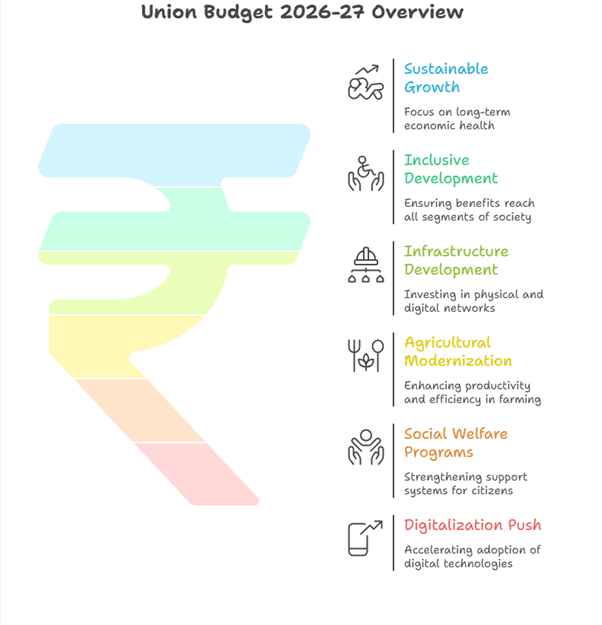
The Union Budget 2026-27, presented amidst a backdrop of evolving global economic conditions and ambitious national development goals, outlines the government’s financial roadmap for the upcoming fiscal year. This budget aims to foster sustainable and inclusive growth, with a strong emphasis on infrastructure development, agricultural modernization, enhanced social welfare programs, and a continued push for digitalization. This blog post delves into the key highlights of the budget, providing a comprehensive overview of the significant announcements and their potential impact on various sectors and the overall economy.
Macroeconomic Outlook
The budget projects a GDP growth rate of 7.2% for FY27, driven by robust domestic demand and a gradual recovery in global trade. The fiscal deficit is targeted to be reduced to 4.8% of GDP, reflecting the government’s commitment to fiscal consolidation. Inflation is projected to remain within the Reserve Bank of India’s (RBI) target range of 4% +/- 2%.
Key Focus Areas
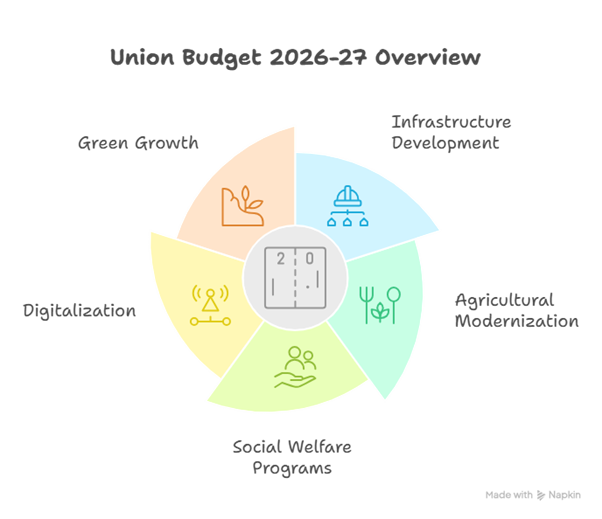
The budget’s core strategy revolves around several key pillars:
- Infrastructure Development: A significant increase in infrastructure spending is proposed, focusing on roads, railways, ports, and airports. This aims to improve connectivity, reduce logistics costs, and boost economic activity.
- Agricultural Modernization: The budget emphasizes modernizing the agricultural sector through technology adoption, improved irrigation facilities, and enhanced access to credit for farmers.
- Social Welfare Programs: Continued commitment to social welfare programs, including healthcare, education, and rural development, with increased allocations to ensure inclusive growth.
- Digitalization: A strong push for digitalization across various sectors, including government services, financial services, and education, to improve efficiency and transparency.
- Green Growth: Initiatives promoting renewable energy, energy efficiency, and sustainable development are prioritized to address climate change and ensure environmental sustainability.
Sector-Specific Highlights
Agriculture
- Increased Allocation for PM-KISAN: The budget proposes an increase in the allocation for the Pradhan Mantri Kisan Samman Nidhi (PM-KISAN) scheme, providing income support to small and marginal farmers.
- Promotion of Agri-Tech: Incentives for the adoption of modern technologies in agriculture, such as precision farming, drone technology, and artificial intelligence, to improve productivity and reduce input costs.
- Strengthening Agricultural Infrastructure: Investments in rural infrastructure, including storage facilities, cold chains, and processing units, to reduce post-harvest losses and improve market access for farmers.
- Focus on Crop Diversification: Initiatives to promote crop diversification, encouraging farmers to shift towards high-value crops and reduce dependence on water-intensive crops.
Infrastructure
- National Infrastructure Pipeline (NIP): Continued focus on the National Infrastructure Pipeline, with increased investments in key infrastructure projects across the country.
- Road and Highway Development: A significant allocation for the construction and upgradation of national highways and rural roads, improving connectivity and reducing travel time.
- Railway Infrastructure: Investments in railway infrastructure, including the development of high-speed rail corridors, electrification of railway lines, and modernization of railway stations.
- Port Development: Expansion and modernization of ports to enhance trade and reduce logistics costs.
- Airport Infrastructure: Development of new airports and upgradation of existing airports to improve air connectivity and boost tourism.
Healthcare
- National Health Mission (NHM): Increased allocation for the National Health Mission to strengthen healthcare infrastructure and improve access to healthcare services, particularly in rural areas.
- Ayushman Bharat: Expansion of the Ayushman Bharat scheme to cover more beneficiaries and provide comprehensive healthcare coverage to vulnerable populations.
- Investment in Medical Education: Establishment of new medical colleges and upgradation of existing medical colleges to increase the number of doctors and healthcare professionals.
- Promotion of Digital Health: Initiatives to promote digital health technologies, such as telemedicine and electronic health records, to improve healthcare delivery and accessibility.
Education
- National Education Policy (NEP): Implementation of the National Education Policy, with a focus on improving the quality of education, promoting skill development, and fostering innovation.
- Increased Allocation for Education: Enhanced funding for school education, higher education, and vocational training to improve access to quality education for all.
- Digital Education: Promotion of digital education through the use of technology, online learning platforms, and virtual classrooms to enhance learning outcomes.
- Skill Development: Initiatives to promote skill development and vocational training to enhance employability and meet the demands of the industry.
MSME Sector
- Credit Guarantee Scheme: Enhancement of the Credit Guarantee Scheme for Micro and Small Enterprises (CGTMSE) to provide collateral-free loans to MSMEs.
- Promotion of Technology Adoption: Incentives for MSMEs to adopt modern technologies, such as automation, artificial intelligence, and cloud computing, to improve productivity and competitiveness.
- Simplification of Regulatory Compliance: Measures to simplify regulatory compliance for MSMEs, reducing the burden of paperwork and improving ease of doing business.
- Market Access: Initiatives to improve market access for MSMEs, including participation in government procurement programs and access to e-commerce platforms.
Green Growth
- Renewable Energy: Increased investments in renewable energy projects, such as solar, wind, and hydro power, to reduce dependence on fossil fuels and promote clean energy.
- Energy Efficiency: Initiatives to promote energy efficiency in various sectors, including industry, transportation, and buildings, to reduce energy consumption and greenhouse gas emissions.
- Electric Vehicles (EVs): Incentives for the adoption of electric vehicles, including subsidies, tax breaks, and charging infrastructure, to promote clean transportation.
- Sustainable Agriculture: Promotion of sustainable agricultural practices, such as organic farming, water conservation, and soil health management, to reduce environmental impact and improve agricultural productivity.
Taxation Proposals
- No Changes in Income Tax Slabs: The budget proposes no changes in the income tax slabs for individual taxpayers.
- Corporate Tax Rate: The corporate tax rate remains unchanged at 22% for existing companies and 15% for new manufacturing companies.
- GST: Measures to simplify the Goods and Services Tax (GST) system, including streamlining tax rates and improving compliance.
- Customs Duty: Adjustments in customs duty rates on certain items to promote domestic manufacturing and reduce import dependence.
Impact and Way Forward
The Union Budget 2026-27 presents a comprehensive roadmap for sustainable and inclusive growth. The focus on infrastructure development, agricultural modernization, social welfare programs, digitalization, and green growth is expected to have a positive impact on various sectors and the overall economy.
However, the successful implementation of the budget proposals will require effective coordination between various government departments, active participation from the private sector, and a conducive regulatory environment. Monitoring the progress of key projects and addressing any challenges that may arise will be crucial to achieving the desired outcomes.
The budget’s emphasis on long-term sustainable development and inclusive growth signals a commitment to building a resilient and prosperous India for the future. By focusing on key priorities and implementing effective policies, the government aims to create a favorable environment for investment, innovation, and job creation, ultimately improving the quality of life for all citizens.